
Dance is nature. Listen to your heart. It dances with its own rhythm. The biggest thing that classical dance and music do to you is help attain balance between your mind and soul.
Pandit Birju Maharaj
Kathak, one of the ancient Indian classical dance forms, originates from Uttar Pradesh, India. Rooted in storytelling, the term “Kathak” itself means “a storyteller” in Hindi. Its rich history can be traced back to the time of Natyashastra, the treatise for performing arts. Throughout its journey, Kathak has evolved, absorbing influences from temple traditions, the Mughal era, and the royal courts, shaping it into the contemporary form we see today.
The beauty of Kathak lies in its ability to embrace change while honouring its traditional roots. Its literature, movement vocabulary, and intricate rhythmic patterns known as Taal have been shaped by the best aspects of different periods and transitions. Notably, Kathak stands apart from other Indian classical dance forms as it showcases the Taal as a separate component, highlighting its mastery of rhythm.
The traditional repertoire of Kathak encompasses various elements such as Thaat, Amad, Parans, Tode, Tatkar (footwork), Gaatnikas (narrative pieces), Gaatbhav (expression through movement), Chakradars (pirouettes), Farmaishee compositions, and Tukaras. Notably, Gaatbhaav stands as a distinct intra-form in Kathak, allowing the dancer to portray a short story or scene solely through the music and rhythmic patterns, evoking different emotions and characters.
Tatkar, the footwork in Kathak, holds special significance. It symbolises giving a physical form (Akaar) to the essence (Tattva). Through practice, the dancer achieves equal command over both feet, creating a sense of wonder and marvel (Adbhuta Raasa). Kathak encompasses both Nritta (pure dance) and Nrutya (expressive dance) in perfect harmony, showcasing its unique style and techniques, such as Tatkar and Chakkars (spins).
Nrutya Aanga, the expressive aspect of Kathak, is incredibly strong. Dancers communicate emotions through a combination of music and words, creating intense and deeply joyous performances. From Vandana (invocation) to various compositions like Geet, Thumari, Bhajan, Chaturang, Hori, Kajari, and Chaiti, which are based on semi-classical music or seasonal themes, Kathak allows for the portrayal of different characters and sentiments.
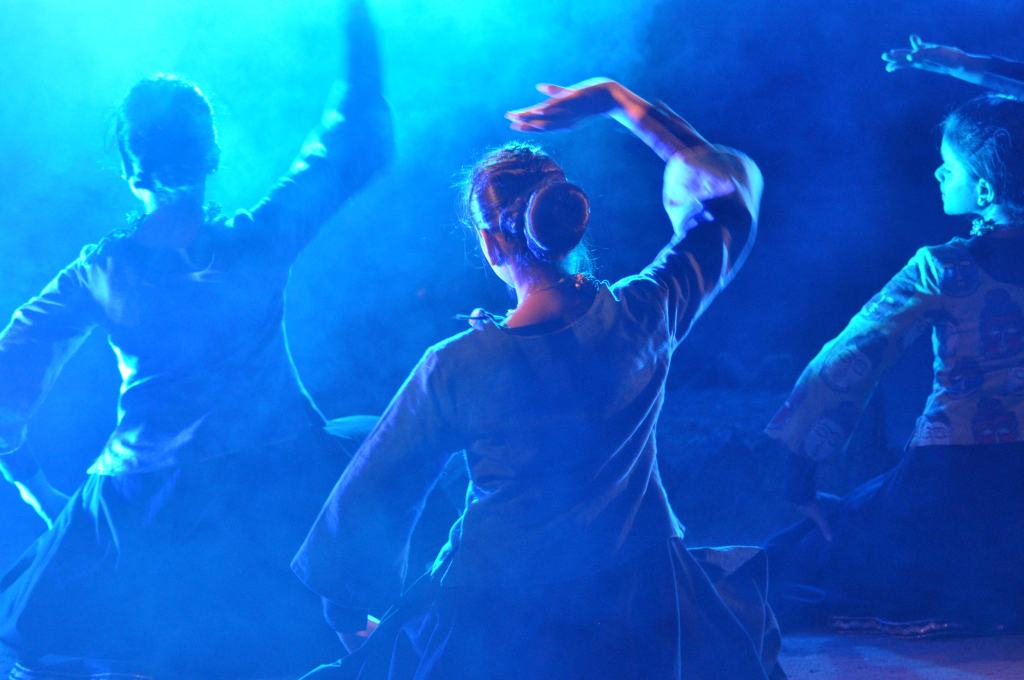

Contemporary Kathak explores a wide range of subjects and issues, incorporating innovative techniques and technology to connect with diverse audiences. While experimentation is encouraged, the authentic traditional format of Kathak remains intact. This flexibility enables the form to effectively present any subject while staying true to its roots, expanding the boundaries of artistic exploration within the dance form itself.
 Abha Auti